Thursday, June 1, 2017

Traveling and Living in the Arabian Gulf-Year One

"Is it safe?"
"Can you drive?"
"Do you have to wear a burqa?"
"Are you crazy?"


We heard all of of this and more as we prepared to move and in our first few months here in the Middle East.  I know that the things you've heard in the media about this region leave out so many of the positive aspects of the area.  Central Asia, as it's more accurately named, can be a tough place to live, but also offers a fascinating learning experience and some amazing travel opportunities.   After some reflection on our time here, there are definitely some things I have come to appreciate about our current home.


The People of the Arabian Gulf

People from this part of the globe (and others) have committed terrible acts of terrorism, without a doubt.  However, there are 1.6 BILLION Muslims on Earth and the assumption that all Muslims believe in, support, or commit acts of terror is just plain wrong.  Our experience here is just the opposite, in fact.  The Muslims we have met here do not consider those who carry out attacks on other people Muslims; they don't include them in their definition of Islam. It's been our experience that all places, religions, and cultures have good and bad people, and the Middle East is no different.  We are also quite far geographically from the places you hear about on the news like Syria, Yemen, and Turkey. 

While I get frustrated with the way things work here at times, I have found that the people here just want to be able to run their country and practice their religion their way--without extremism and without interference from the outside.

We've now been in Kuwait, Bahrain, Oman, the UAE, and Qatar and our experience has been overwhelmingly positive.  We've been invited in to the homes of strangers, shared lovely conversations in each country, and enjoyed exceptional hospitality.  While I certainly do not agree with some of the tenets of Islam, I respect the Muslims I have met and have been met with a "live and let live" mentality when our differences of beliefs are discussed.

Safety

The Gulf countries are very safe.  Violent crime is extremely rare and personal crimes like robbery are also rare.  Crime carries severe punishment (deportation or even death) at the hands of the government here and many think that this dissuades people from committing crime.  I walk around in the dark, by myself,  and don't think twice about it.  I cannot say the same about Seattle or South America, two places where we've been the victims of theft.


Modesty in dress and behavior is definitely an expectation here, especially for women.  While I sometimes resent the oppression I feel as a Western woman living here, I understand that I am a guest in this culture and I try to follow the cultural norms, which include wearing clothing that covers knees, shoulders, and chest.  While it's not illegal to dress like a Westerner, I've found that I'm more comfortable in public when I try to adapt to the culture by wearing long skirts and shirts that cover my shoulders.  Clothes that are considered immodest draw a lot of staring and the occasional rude comment coupled with a disapproving glare--usually from an Arab woman.

Safety goes out the window when we get on the road, but that's another story...

The Food

This is absolutely the best part of living here!  The food is diverse and rich in historical significance.  Any time we want, we can eat Lebanese (my favorite), Egyptian, Iranian, Moroccan, Turkish, Indian, American, Thai, Chinese...but the Arab food is the best.   Fresh, airy bread is served with most meals in copious amounts.  The hummus is rich and creamy and comes in a dozen varieties.  Lamb is very popular and my favorite version, "kofta" is ground with spices and then grilled on a kebab.  We've tried many foods we've never had before and some of them have become staples of our meals out, including Fatoosh, a salad with a spice called sumac and toasted pita, Mutabal, a roasted eggplant spread, and Za'atar, a spice that goes on anything and everything.


I eat pounds of this stuff at a time.


We like to eat at the market (souk) where the food is cheap and comes with enough to feed a whole family.  The lamp chops are one of my favorites.  The waiters watch you eat and come around with more hot bread every time they think you need more, which is apparently every 5 minutes. 


The busy souk on a Friday night in Doha

Unique things to see and do

Souk-a marketplace similar to others around the world, usually a maze of closet sized shops selling everything from cheap plastic stuff from China, to housewares, to beautiful rugs from around the region.
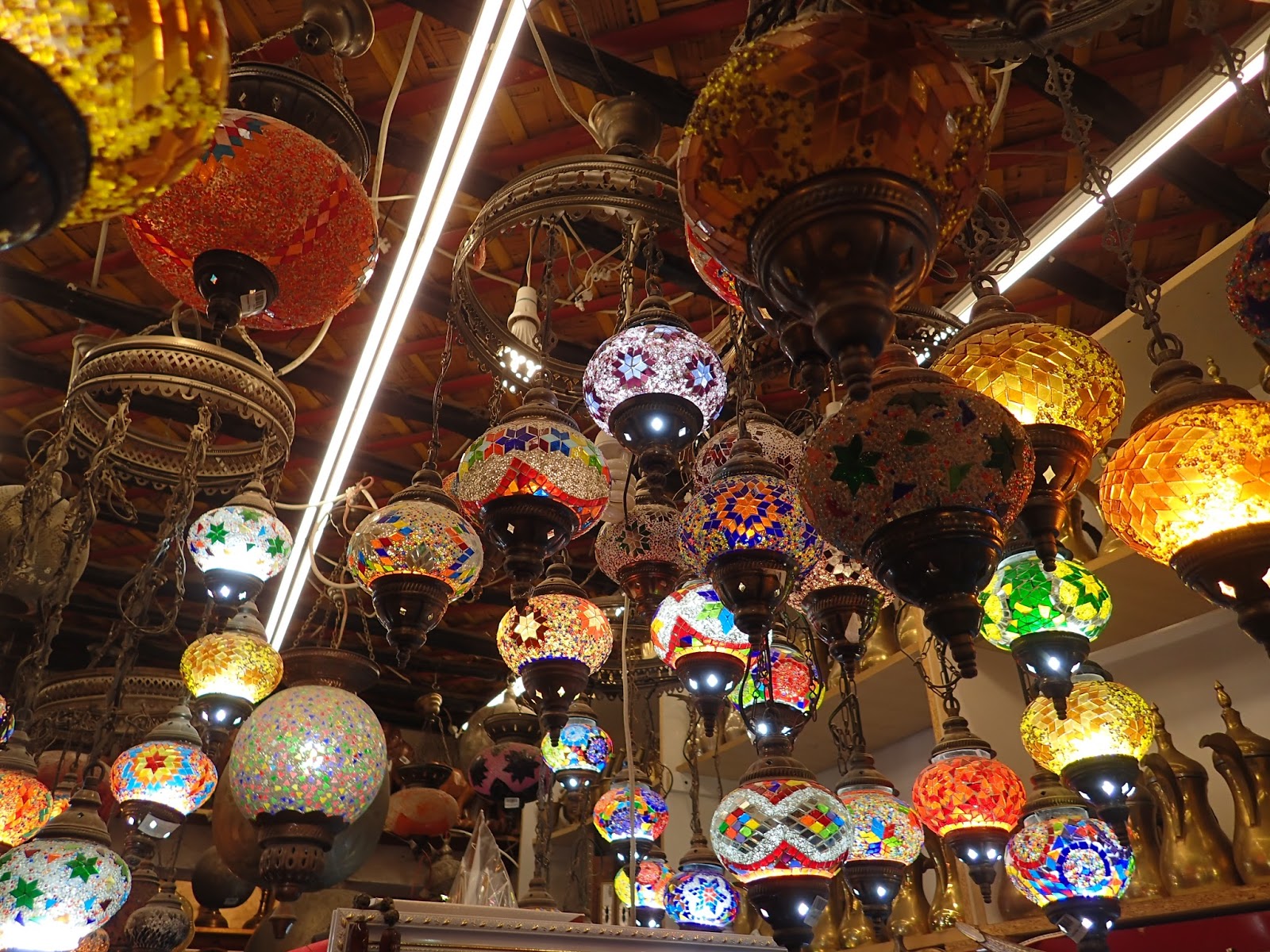

Painted lamps hanging in the souk


Downtown-The Gulf countries are quite young.  Their downtown areas are full of interesting and unique skyscrapers.  My favorite so far has been Doha, Qatar.


This is the grand mosque in Abu Dhabi, the grandest of the grand in the Gulf

Mosques-Each country has a 'grand' mosque along with the hundreds of smaller ones.  They are incredible works of art, with thought put in to each and every detail of the architecture, design, and decoration.


Living in another culture that is fundamentally different than my own has its challenges, but one thing I've learned about living abroad is that you have to focus and be grateful for the things you have to gain from the place instead of focusing on what you are giving up or missing.  With this in mind, I'm excited for what Kuwait and the Gulf has to offer us in our next year of adventure and travel.

Saturday, April 29, 2017

Sri Lanka

For Spring break, we decided to spend the week on the island nation of Sri Lanka. We were treated to warm weather, clear water, and this view for 5 days.


We ate well and spent a lot of time enjoying beer on the beach.


We also toured a small family run cinnamon farm,where 
this man demonstrated how the bark is removed by hand to dry and sell. 

 Sri Lanka was once ruled by many different cultures and nations before their final independence from Britain in 1948.  There are some leftovers from the colonial period, especially in the southern city of Galle.


Home to many different religions, Sri Lanka was a welcome retreat from the Middle East for the variety it offers.  We saw many Buddhist and Hindu temples, as well as dozens of mosques and churches.


Failaka Island, Kuwait

Failaka Island lies about 20 km off the coast of Kuwait. It was settled as early as the 3rd century BC and has been a part of several civilizations including Dilmun, Sumer, the Kassites of Mesopotamia, the Babylonians, and the Greeks prior to the 
spread of Islam. 


At the time of the Iraq invasion of Kuwait in 1991, about 2,000 people lived on the island. The Iraq army expelled all the residents to the mainland and took over the island.  The army used the island for military training and target practice.  The sewer and water systems were destroyed, making the island virtually uninhabitable. The residents have never returned, but there is a small tourist center that takes people around the island to view ruins from the ancient and modern world. 


  Wandering around the town ruins is interesting and a bit creepy. This school in particular was especially haunting.


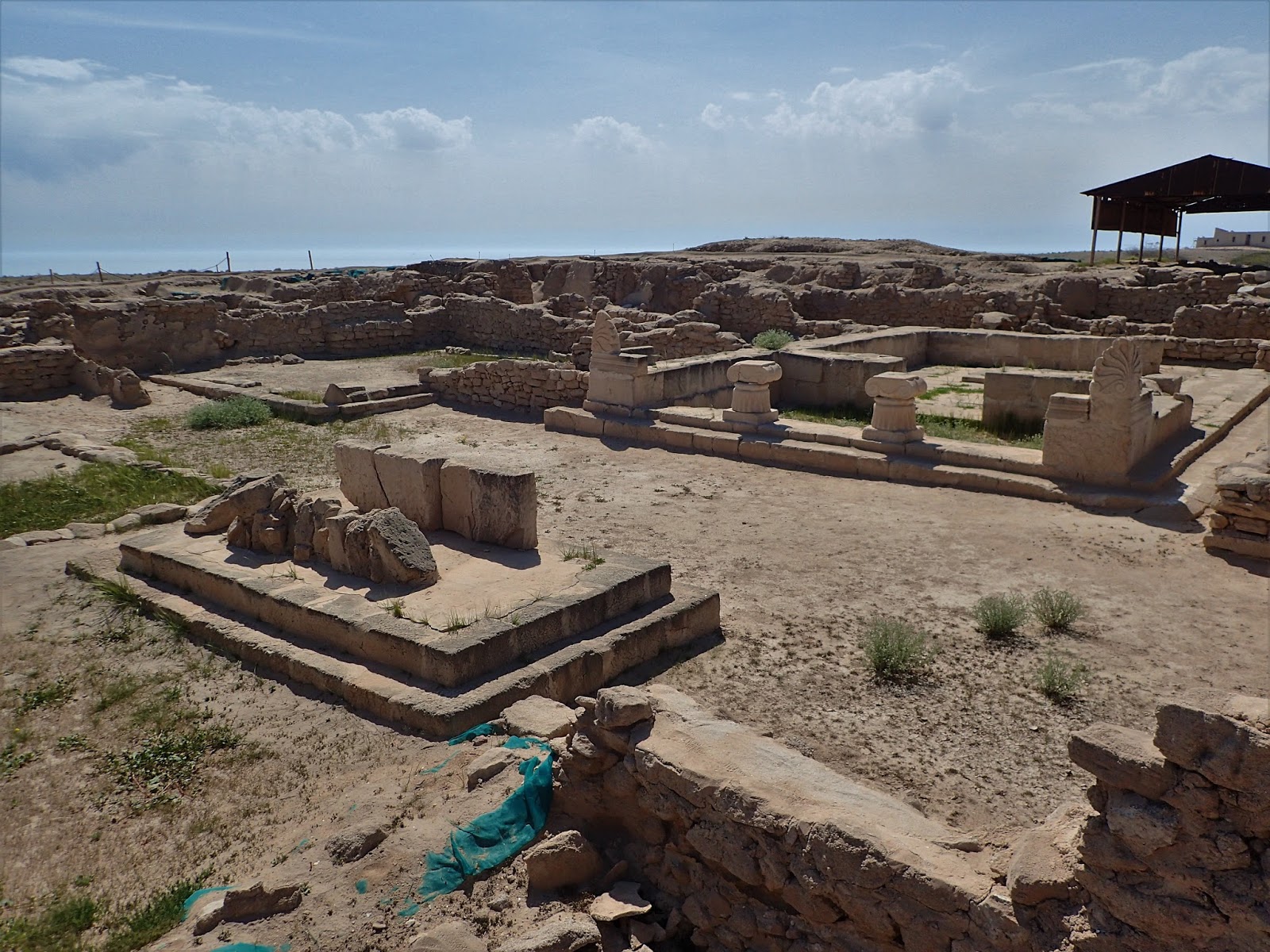
The tour we joined obtained permission to visit these partially excavated ruins. 


Saturday, March 4, 2017

House of Mirrors Tour with Lidia Qattan

We recently had the opportunity to visit a unique Kuwait landmark, the House of Mirrors.  The House of Mirrors is a museum and art gallery owned and operated by artist Lidia al-Qattan, the widow of Khalifa al-Qattan, a renowned Kuwaiti artist who was the first Kuwaiti to hold exhibitions of his work abroad. She started decorating one small wall with mirrors after her daughter (who helps run the museum) broke one, and then became inspired until the whole house inside and out was covered with mirrors.  


These are the front doors.  At night, they have spotlights on them, which make the mosaic twinkle beautifully. 


This is the outer courtyard, where the images are focused on nature. 


We went to the tour anticipating a short time in her house that is covered in mosaic.  What we got was something much more surreal and entertaining; something totally unexpected in Kuwait.


This is Lidia.  She came to Kuwait with from Italy in 1966 with her Kuwaiti husband.  She's about 4 and 1/2 feet tall, but with a much larger personality.  She is a painter, a sculptor, cosmologist, and a firecracker.  She wears a skirt and pants; she says the skirt was for her husband and the pantaloons for her. 

 Each piece of her art has its own message; about unions in society, women’s rights, human DNA, even some on quantum physics. This room had paintings representing the Big Bang and the creation of the universe.  She has a room dedicated to her ideas about the universe, where the walls are made of painted black carpets, interspersed with flashing lights.  She plays some very space-y music and turns off the lights. The only true word to describe the experience was trippy.


Lidia spoke about the changes in Kuwait since she arrived and how that has impacted her art.  The house is full of her husband's paintings, which are not part of any national collection, although he is perhaps Kuwait's most famous painter. Khalifa's style and his paintings come from a time when Kuwait was a much more open society.  She told us a story of writing an article about one of her husband's most famous paintings, but the newspaper would not print a photo of the painting with the article citing, "sexuality," to which she said, "Absurd!"

These are a couple of Khalifa's paintings. Lidia has almost 70 of them in the house on display.  The one below was my favorite of his, which she said represents the Old Kuwait (inside the circle) and the New Kuwait. 


The house is open by appointment only.  Tickets are 3kd each.  Here is their website for more details on timings and contact information: http://www.mirrorhouseq8.com/


Friday, March 3, 2017

A weekend in Bahrain


Bahrain is a small island kingdom, with just over 1 million people.  It's a short and inexpensive flight from Kuwait, so we decided to spend our recent 3 day weekend there.  We rented a car and explored the main island thoroughly.


Bahrain's economy is entirely based on oil production, which is evident as soon as you enter the desert outside of the city.


We also visited the Tree of Life, a 400 year old Mesquite tree famed for its ability to survive in a desert with no obvious source of water. (Bahrain receives less than 2 inches of rain a year.)  Some people believe it is the site of the Garden of Eden and that is why the tree has survived.  The tree receives up to 50,000 tourists a year.


We spent much of our time wandering around Manama, the capital city.  The picture on the left is of dried whole lemons, a popular seasoning in Arabic food. 


We also visited Qalat al Bahrain, a fort that is an Unesco World Heritage site.  Some of the artifacts found here date back more than 9,000 years.  Bahrain was once ruled by the Babylonians,  the Persians, the Greeks, and the Portuguese, so there is an odd and interesting mix of artifacts and structures in the fort and attached museum.


Thursday, February 23, 2017

Aerial View of our city

Check out this video of Kuwait City made by our friend Kevin with his drone!  You can follow him on Instagram for more pics and videos @bestfootfilms.
Kuwait City Skyline

Friday, February 3, 2017

Winter Holidays in Oman

On our first long vacation since we moved to Kuwait, we decided to visit the Sultanate of Oman. We rented a car and spent 2 weeks driving around the country.   Despite being surrounded by countries in turmoil, Oman has had many years of stability and peace, though they did experience some unrest during the Arab Spring in 2011.  They are ruled by an absolute monarch who is admired for bringing Oman into the modern world.  Until the 1970's when he took the throne, Oman had only 1 public school and hardly any paved roads.  Although it has more traditional feeling than the other Arab countries we have visited, the cities are now definitely modern.  We loved the mix of old world Arab living and modern feeling cities.  Oman has oil revenue, but because it is small compared to that of their neighbors, many Omani people still live traditional lifestyles like goat herding in the desert or sustenance fishing.  Omanis work in tourist services and hospitality and are happy to have foreign visitors. This is a welcome change for us and made our travels in Oman feel much more authentic.  Omanis were very friendly and we had many people approach us, curious about our camping set up.  We had several "conversations" where the Omani spoke no English and since we clearly do not speak Arabic, the conversations involved a lot of smiling and gesturing.  Maybe one of our best adventures was when we got our car stuck on the beach one day and within 3 minutes had a rescue, complete with an invitation to breakfast at our rescuer's home. 


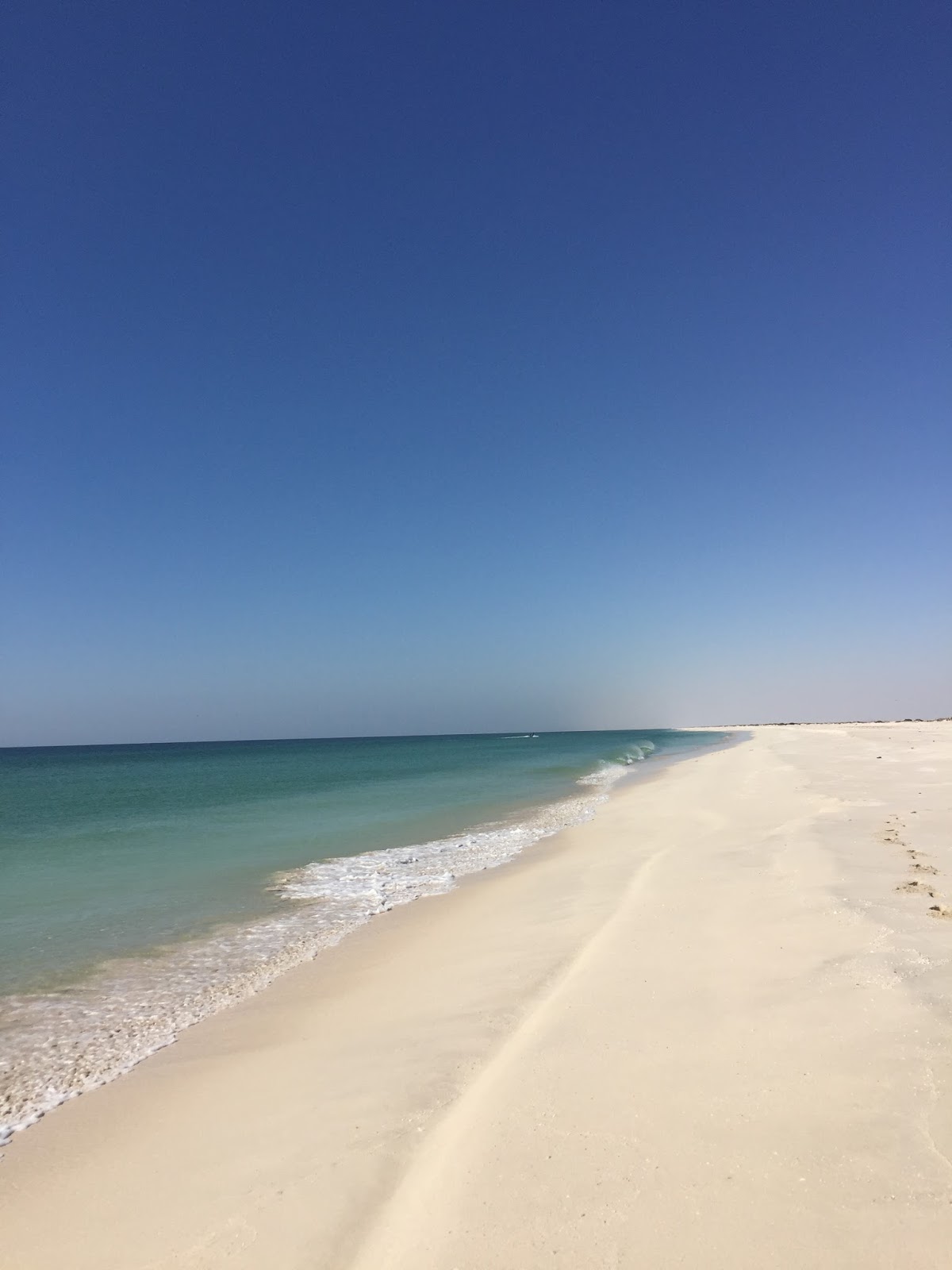
Oman has many miles of beautiful coastline with clear and clean water. This is a khor (rocky headland) near Muscat.

We spent many hours walking the beaches. The tide pools were a highlight.


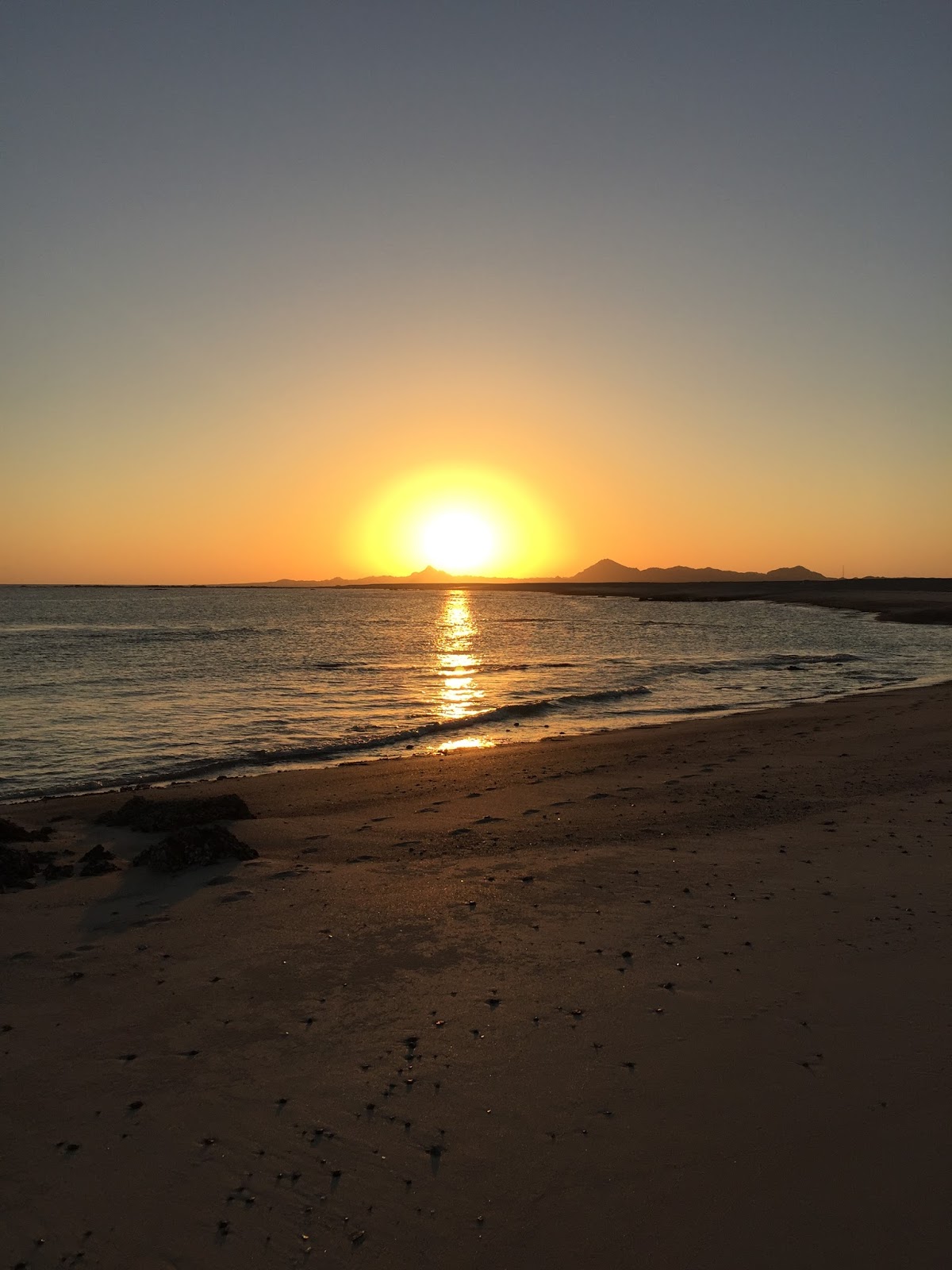
We were treated to gorgeous sunsets every day.  This is on Masirah Island, a large island about 5 hours south of Muscat, the capital. 


Camels are an important part of life in the desert.


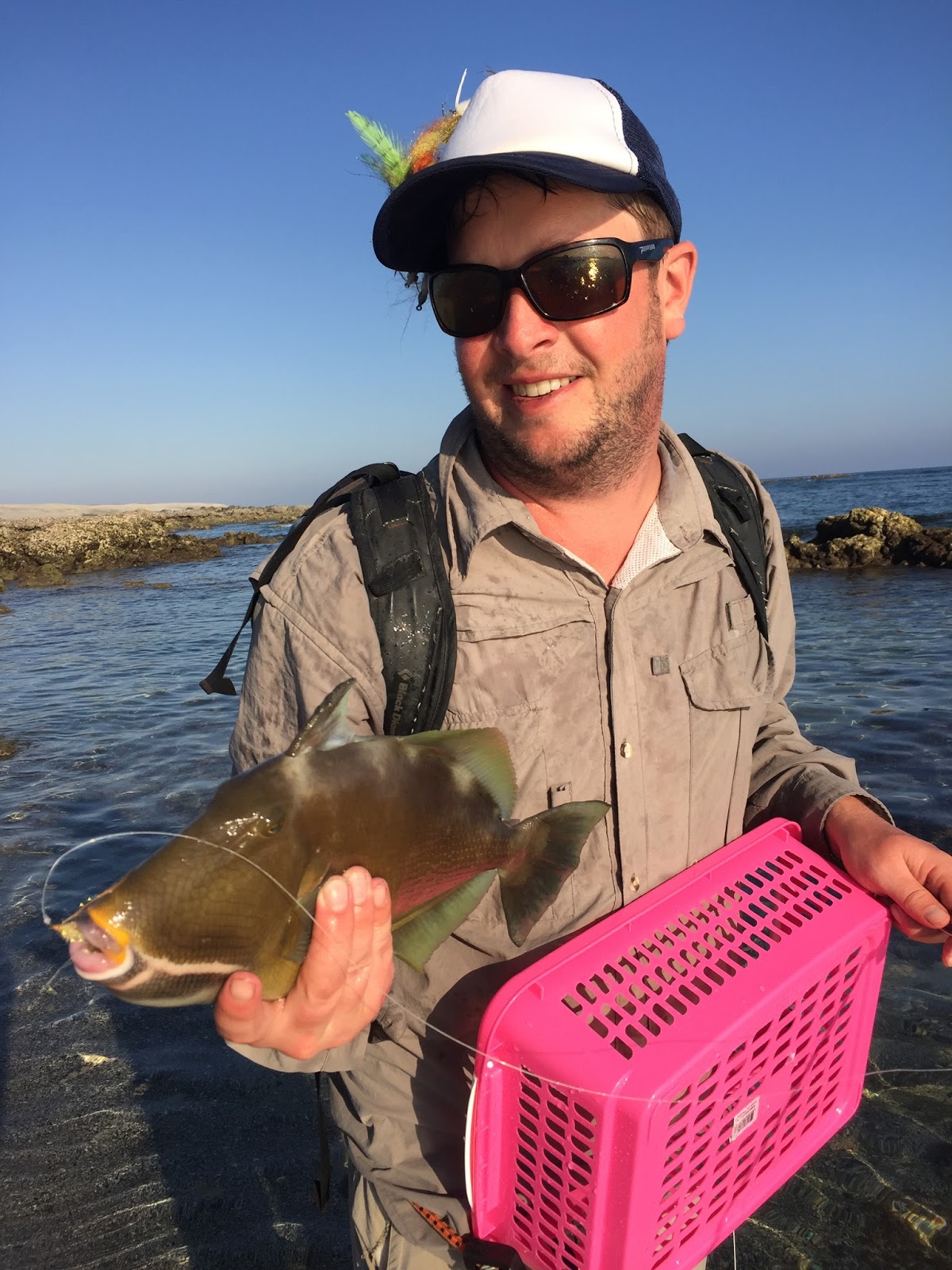
Trigger fish caught on Masirah Island


Our home for most of the 2 weeks