Sunday, April 10, 2016

Summer Break Part 3: Fishing in Paraguay

After traveling and fishing in Patagonia with my dad and brother, I convinced Ben to come spend some time fishing with me in Paraguay before he flew home. The first component of our trip was a camping and kayaking trip I had been wanting to do for a long time.
We and made arrangements to rent some kayaks and get dropped off on the Río Aquidabán near Concepción.  (Contact El Roble for more info)We camped and fished on this river for two nights before entering the Paraguay river and paddling to Concepción. This river featured beautiful beaches which were ideal for camping, swimming, and fishing.

Paraguay offers some interesting places to travel for adventurous outdoorsy people. However, there is little infrastructure for tourism compared to many other South American countries. Fishing is one activity that will keep people occupied while exploring rural Paraguay. Another good activity for the outdoors would be bird watching. Generally, we focus on fly fishing, but living in Paraguay has taught me that there are also times to fish with bait. 
The most exciting fish of this trip was a good sized stingray.
The afternoon of our third day we entered the Río Paraguay. As is often the case, the river was high and the surrounding forest and grassland were inundated with water. This mean there were few places to camp and swim once we left the Aquidabán.


With limited options and limited daylight we pulled over on a river island to ask a subsistence fishing family if we could camp next to their house.


The family was super friendly, the also had two pet coatís.

Our last day of the trip consisted mostly of a long hot paddle to the port of Concepción.

On the way back to Asuncíon, we stopped to camp for a couple of nights at my friend's ranch land in the Chaco.
Many places in Paraguay offer opportunities for Wolf Fish, or "tere'yi." This fish thrives in many types of water. When heavy rains flood the land, fish move all over the place and any farm pond or road side ditch could potentially hold a number of species. Tere'yi in particular are ambush predators that will definitely attack a fly.


We borrowed some horses to access some of our friend's more remote farm ponds.
In addition to Wolf Fish, Ben took down some other toothy fish; Pirañhas


Rural scene in the Paraguayan Chaco.

Ben gets Pacu happy at the "pesque y pague" (pay and fish) near Areguá, Paraguay.


Moto garden on Ruta 9. Motos are a popular inexpensive mode of transportation in Paraguay. However, often people do not want to pay to licence them properly and large collections of derelict motos accumulate at many police checkpoints.

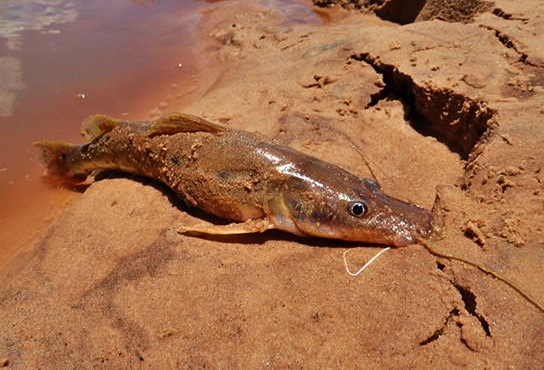
Tres Puntos catfish, Río Aquídaban.


Clouser Minnow, before and after the Pirañha.

While fishing a roadside ditch along Ruta 5, Ben takes on the philosophy: to catch the Wolf Fish you must become the Wolf Fish.
Our last Paraguayan adventure was a quick trip to the Río Tebicuary.
Small Dorado, Río Aquídaban

Friday, March 18, 2016

Summer Break Part 2: Patagonia


We have some more photos from our last South American summer break. After leaving Brazil, I met my brother in Asunción and we embarked on a second leg of my travels, a return fishing trip to Patagonia. We had planned to drive my car to Bariloche and meet my dad there. However after evaluating the amount of gear, people, and the size of my car, we wisely decided to bus it and rent a larger car after we arrived.
We had a lot of bus hours! It was about 80 each by the time everything was all wrapped up.
Once off the bus, we spent about three weeks fishing beautiful lakes and rivers between Bariloche and Aluminé in northern Patagonia. This included two amazing float trips and mostly a lot of walk and wade fishing. It was a remarkable experience to return to some special places we had experienced two years ago, as well as to explore some new waters.

We stumbled across one drainage that had absolutely phenomenal hopper fishing. Simply walking through the grass would send clouds of hoppers flying and those that landed in the water were taken down by some good sized brown and rainbow trout.

Ben explores a freestone section of the fantastic Neuquén river.
Dad lifts up a nice rainbow during one of our float trips.


We fished streamers, nymphs, and drys. All caught fish in different situations. The most common dry flies around seemed to be mayflies and parachute style mayfly imitations were usually effective. 
Ben and Dad day drinking in San Martín.

Ben sets off in his float tube.


Rainbow


Stream side nap time
Stream side camping


Good looking truck in Buenos Aries.

Underwater Rainbow


Brown
Rainbow


Ben hiking home after a day on a phenomenal spring creek.


Setting off for a three day fishing adventure.

Ben, many hours into the return trip, enjoying what could easily be Argentina's favorite food: the ham and cheese sandwich.


Sunday, March 6, 2016

Summer Break Part I: Brazil


We have been in Asunción for several weeks after two amazing months of travel. As usual, it has taken us quite a while to go through our photos and update the blog. Our adventure this year began by bussing to Curitiba and hopping on small boat to spend Christmas on Ilha do Mel.


This little island was a fantastic place to spend a few days enjoying the beach. There were no cars so we got around biking and walking. We visited the remnants of an old Portuguese fort, swam, enjoyed some sea food, and did a little fishing.


We then spent a few days in São Paulo and then met our friends from Paraguay, Bree and Adrianne, in Rio for New Years. Both cities were a welcome change from Asunción and we took advantage of some fantastic international and local food, as well as some surprisingly good beer. Artisanal beer culture is expanding rapidly in South America. While some brews are far worse than sticking with a local lager, quite a few brewers are doing impressive new world style pales and IPA's, and Brazil seems to be at the forefront of this.


In Rio, we rented a car and embarked on a road trip, driving approximately 20 hours north to the state of Bahia and city of Salvador and then returned along the coast to Rio.


En route to Salvador, we spent a day at Parque Nacional Chapada Diamantina. This area offers to hiking, swimming in beautiful creeks and waterfalls, exploring a number of caves, and viewing wildlife, although we saw very little other than a rattlesnake which crossed the road in front of our car and a scorpion who was living in our hotel room.
The old part of Salvador has beautiful old buildings going back to the 1500's. Salvador was the original capitol of Brazil and an early center of the slave trade in South America. In addition to an abundance of history, Salvador offers phenomenal seafood centric cuisine, and unbelievably beautiful beaches.
Taking a day to relax in the surf town of Itacaré on the return trip to Rio.
Cave visit, Parque Chapada Diamantina

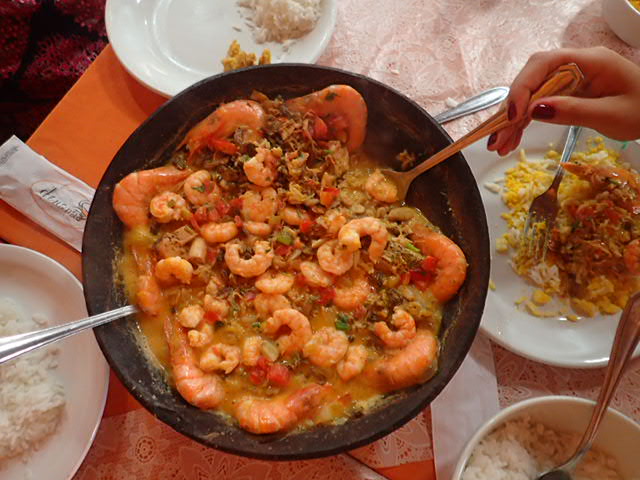
Moqueca - a seafood stew served throughout Bahia, perfect for those living far from the coast and seriously deprived of good seafood.

Fitas, bracelets that say "remembrance of Bahia." Put it around your wrist and tie three knots. When it falls off, your wishes will come true. They are also tied around church gates similar to the reason people light candles in a Catholic church.

Biking around Ilha do Mel

Beach side oyster salesman, Salvador
Local fish, Ilha do Mel 
Beach Crab


Getting ready for New Years in Rio - white is traditional 

Kristi and I did some handline fishing on our drive back to Rio. This is the first and only fish I have ever caught in Brazil.

Sunday, October 4, 2015

Esteros del Ibera, Argentina


 During our recent spring break we were able to check out a place we had been eyeing on the map for a long time: the Esteros del Ibera,the world's second largest wetlands.
We traveled south through Paraguay without any problems, crossed the river into Posadas, and traveled west for about an hour to Ituzaingo, Argentina. We even made it to the beach in time to see the sunset on the Rio Paraña.
  

 Like most of our Paraguayan adventures this trip started with a salty, fatty breakfast at the frutería in Paraguarí. This place is reminiscent of a truck stop in the US, but better and we love to eat here.
From Ituzaingo we were able to easily find a jeep tour into the wetlands. Although we only saw a relatively small part the area, we were both glad we made the journey.  Once we left estancia land where all the cattle were grazing and crossed into the protected area, Capybaras (the world's largest rodent) and Caiman (related to the alligator) were everywhere, as well as great bird life, including the Rhea, Jabairu, Roseate Spoonbill, and Southern Screamer.

We also enjoyed this religious scene on a church in Loreto which featured parrots and capybara.
And of course some fly fishing on the Paraña river.