Saturday, January 17, 2015

Bolivia: Santa Cruz, Sucre, Potosi

We started our Bolivian adventures with an unexpected week in Santa Cruz due to some visa problems.  To the left: the result of many boring hours in the immigration office.  


Our trip to Santa Cruz through the Chaco; long, hot, and somewhat problematic.

Typical food in Santa Cruz.  This was shredded beef and rice, fried plantains, egg, and yucca.

Central Plaza, Santa Cruz

A few of the really tasty lunch options from the Sucre central market.  Our favorite was a sopa de mani followed buy some picante de pollo.

An afternoon thunderstorm gathers over Sucre

Simple earthen brick houses cover the hillsides of rural Bolivia as they have for generations.

Pork vendor, Sucre, with a special New Years Eve offering. (the sign reads "I am a tasty little pig")

An awesome assortment of chili pastes from the market in Sucre, giving simple Bolivian foods a variety of great flavors severely lacking in Paraguyan cusine.


Siete Cascadas: a popular day hike from Sucre.  

To the Right: looking at the plaza in Sucre, the polarizing filter on the camera had a super weird interaction with the window glass in a local cafe.

The sun sets on Potosi, considered the worlds highest city at over 4,000 meters.  Potosi was once the largest city in South America, as a result of mineral wealth found in the surrounding hillsides.  Cerro Rico, in the background, has been scarred by mining since the arrivial of the Spanish, much to the detriment of the health of those who mine there. 


Creepy child mummies on display at a historical museum in Potosi.

Wednesday, December 31, 2014

Filadelfia, Paraguay

Filadelfia is a town in the Paraguayan Chaco that was founded by Mennonites in 1930. It operates as a cooperative, where everyone sells their agricultural products to the cooperative and  everyone shares the benefits.  The town looks different than other Paraguyan towns and the German influence is obvious in the  look and feel of the town.   There is also a prominent indigenous presence , which is also unique to Paraguay, as there are not many indigenous people left in the  country.


This is a "bottle tree" which is unique to the dry Chaco region. It stores water in the wide bottom part of the trunk. We were also told that the early Mennonite settlers  used them as coffins during a cholera epidemic shortly after the founding of the colony.
We arrived early in the morning after an overnight bus ride. We couldn't check into our hotel so I took a nap in the city park.

One of the many crops growing here were peanuts.  The colony also produces sesame, chia, and dairy products.

This is a "peccari"or wild boar.  They have been hunted extensively in the country.  We visited a project that raises them and then releases them into the wild, attempting to rebuild the population.

An old bunker from the Chaco War (with Bolivia). 
Thorn of the bottle tree

Main street

Wednesday, December 10, 2014

It's finally Summer!!

We are gearing up for our 2 month summer break, beginning this Friday.  We'll be busing through Bolivia and Peru this year and have a long list of exciting places to visit. While we are missing our family and friends during the holidays, we are continually aware of how lucky we are to have the opportunity to see so much of South America.

 If you would like to see our trip plans, I created a map; just click on the words "our summer travel map" below.  If you have been to these places or have suggestions for things we are missing out on, let us know.  We will try to post pictures along the way as well.

Merry Christmas!

Our summer travel map

Thursday, December 4, 2014

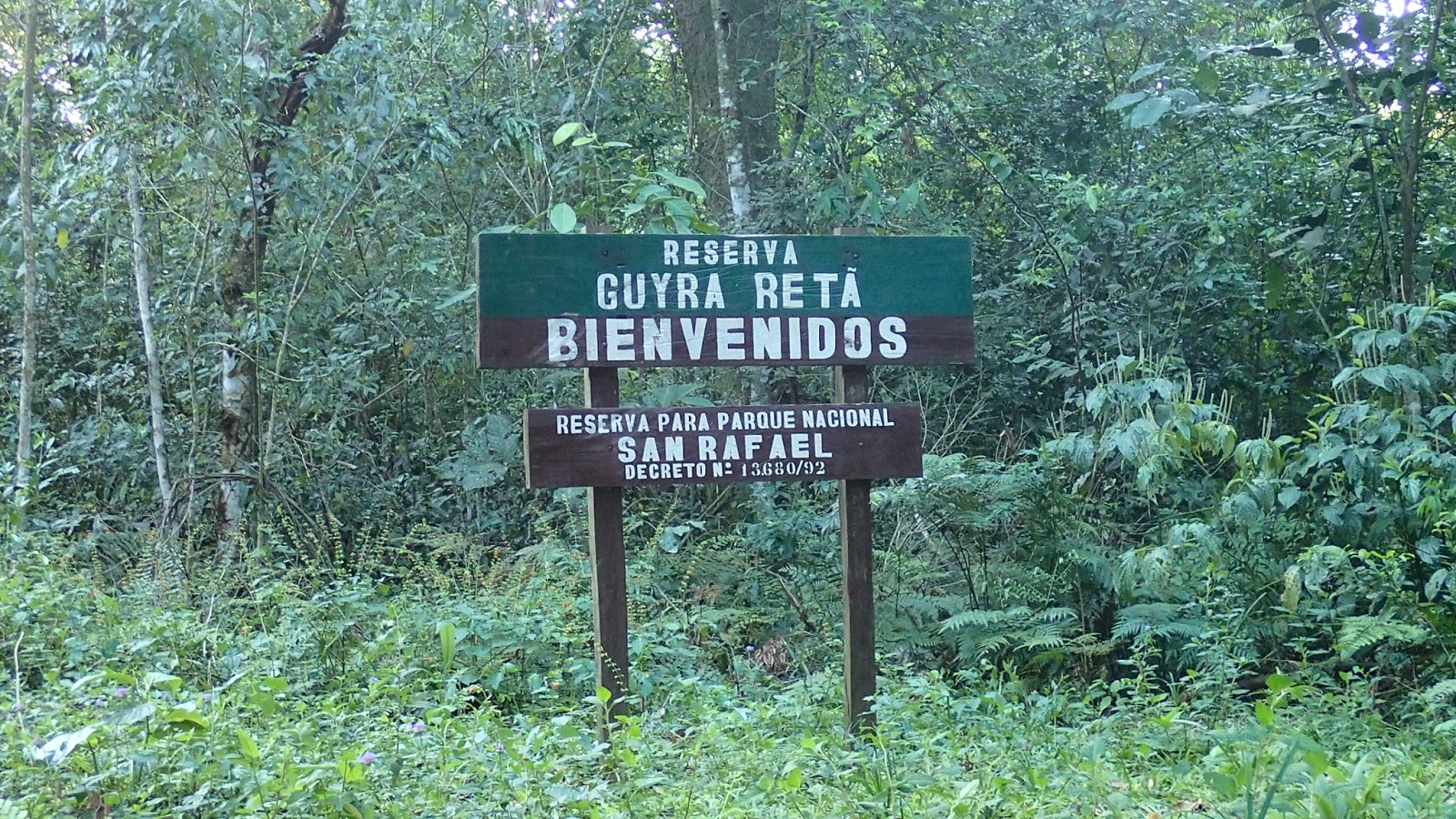
Reserva San Rafael Paraguay


Over our Thanksgiving break a group Asunción teachers traveled to San Rafael, a nature reserve in southern Paraguay. The reserve encompasses the largest remaining areas of Atlantic Forest in Paraguay, as well as incredibly beautiful grassland areas. 

The reserve is primarily a destination for scientists and birdwatchers, although they make their facilities available to anyone interested in a visit. Arrangements for visiting the reserve can be made through the Guyra office in Asunción.  

We were expecting to encounter lots of birds and possibly other wildlife, but saw very little of either.  The area is officially protected, but much of it is private land that is used in the typical way by ranchers and indigenous groups who existed there prior to the creation of the reserve. 


Just getting to the reserve was a bit of a trek.  We drove from the city to the small town of Alto Vera,  From there we followed the ranger down 40km of dirt roads which took about two hours.


At the reserve there are several hiking trails through the forest as well as observation towers that look out over the grassland. We also went on a sight seeing drive with the ranger a few km further into the reserve and to a swimming area where the road crosses a small stream.  One full day was plenty of time for us to see the area around the reserve.  Our group had planned to stay a second full day, but with the heat, bugs, and lack of further areas to explore we decided to move on one day early.  


Add caption


Monday, November 10, 2014

Monkeys, Zombies, and the Circus...happenings in September and October

We visited a farm near Concepcion in September.  El Roble is run by a German man and his Paraguayan wife and is inhabited by rescued wild animals.  We went river tubing, ate good food, and visited with the myriad of animals they have at the farm.

Dave was the only one brave enough to get into the
cage with the monkey.


In October, we went to a "zombie mud run" about 2 hours away from Asuncion.  The race was 5k or so, but was in over 100 degree heat, which was pretty unpleasant.  Luckily, we had the river to hang out in after.  All but 3 of us were "infected" by the zombies during the run.


The Infected


Our house decided to throw a  Halloween costume party, as Halloween is not really a thing in Paraguay.   We had a circus theme, and all of us dressed up to match the theme. 


We had a costume contest and Erica and Dave were the winners!
I was the ring master and Matt was the strong man!

Monday, October 13, 2014

Volunteering with Hogar Esperanza


Every Thursday afternoon, I volunteer with 2 of my friends from work, Ali and Adrianne, at a small foster home with these adorable kids.  We got connected with "hope house" through a British woman whose church helps to sponsor the home and have been visiting for about 6 months now.  They keep the number of children small so that it truly feels like home.  The house mother, Inocencia, stays with them 5 days a week at the home, sometimes with help.  She goes home one day a week and another woman watches them. 

Visiting Esperanza is often the highlight of my week, especially after hanging out with teenagers for 8 hours a day.  We bring puzzles, games, and crafts, and really just play with them.  We try to bring things for them to practice fine motor skills, since most of the kids are around 2-4 years old and they do not get preschool. They used to be quite shy when we would arrive, but now as soon as they hear us coming, they are all at the window shouting and smiling. We get big hugs and kisses upon arrival and when it's time for us to go. We've seen a set of twins come and go, and now two of the kids (a brother and sister) who have been there the whole time we have been coming are going to a new home next week.